
Slough’s Hidden Link to the Font on Every UK Road Sign
Most people know the distinctive look of British road signs — the clean lettering, the simple shapes, the clarity at speed. But few realise that the modern road‑sign system, including the famous Transport typeface, has an unexpected local connection: Slough played a key role in its development.
A National Problem, a Local Solution
By the 1950s, Britain’s road signs were a mess. Different towns used different styles, lettering was inconsistent, and drivers struggled to read signs at speed. As traffic increased, the government needed a scientific approach to road safety — and it turned to Slough.
Just east of the town centre, in Langley, stood the Road Research Laboratory (RRL), the UK’s leading centre for traffic engineering and safety research. The RRL became famous for the Slough Experiment (1955–57), a major trial of new traffic systems, pedestrian crossings, and road‑marking ideas. This included work on the first zebra crossings, introduced nationally in 1951.
How This Shaped the Transport Typeface
When the Ministry of Transport began planning a new national signage system, it relied heavily on the RRL’s findings. Research from Langley showed that:
- drivers read mixed‑case lettering faster than all‑capitals,
- signs needed standardised layouts and consistent spacing,
- legibility at speed depended on stroke width, contrast, and simplicity.
These insights formed the design brief given to Jock Kinneir and Margaret Calvert, the graphic designers who created the Transport typeface between 1957 and 1963.
The typeface itself was drawn in London — but the scientific reasoning behind its shape came from the RRL’s work in Slough.
Testing the New System
Early versions of the new signs were tested on the Preston Bypass (1958) and later the M1, but the underlying safety principles had already been established in Langley. The RRL continued to advise on visibility, colour standards, and driver behaviour as the system rolled out nationwide.
Slough’s Quiet Legacy on Every Road
Today, every road sign in the UK — from motorways to village lanes — uses the Transport typeface. Its clarity and consistency are admired worldwide. And behind that familiar lettering lies a story that begins in Slough, where the research that shaped modern British road signage was carried out.
The font may not have been designed here, but the science that made it necessary — and made it work — certainly was.
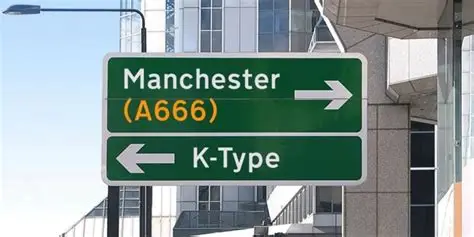
used on British Road Signs.
A number of pages on our site were developed with the use of AI including...
Discover how Slough was at the forefront of Motorsport
Why Data Centres are important for Slough
Slough: Council Overspill Developments
Steam Power On Slough Trading Estate
Prime Minister Attacked by Schoolboy!
Interesting People from Slough Area
Herschel Park and Nature Reserve
Iconic products "made in Slough"
See quotes about Slough here.
Places of Worship in Slough
Road Research Laboratory
Black Park & Langley Park
"Transport" for Transport
The Wheelie Bin - Slough
A Short History of Slough
Who were the Herschels
Pubs and Inns of Slough
Sloughs Transport Links
The Beatles and Slough
Education: LVS Slough
Staying Safe Online!
Langley Aerodrome
About AI a guide.
These were sourced from Copilot and or Chat GPT (and checked by human being).
If you find any errors please let us know webmanager@sloughu3a.com
If you find this item interesting please share it with your friends.
Thank you
Click here to find out more....
Volunteer with Slough u3a
Volunteer a little of your time with us....Hear for yourself...
https://youtu.be/DkASIM11rxY
Find out more about Road Research Laboratory